 GPacino23
After finishing the game for the first time, I feel as though I need to give this game at least one more playthrough before I can really give a full review of it, so these are just some of my thoughts and impressions based on my initial completion. This is not really a review, and just me rambling about my thoughts on the game, I'm sure I'll have a more "locked-in" opinion once I've beaten the game again.
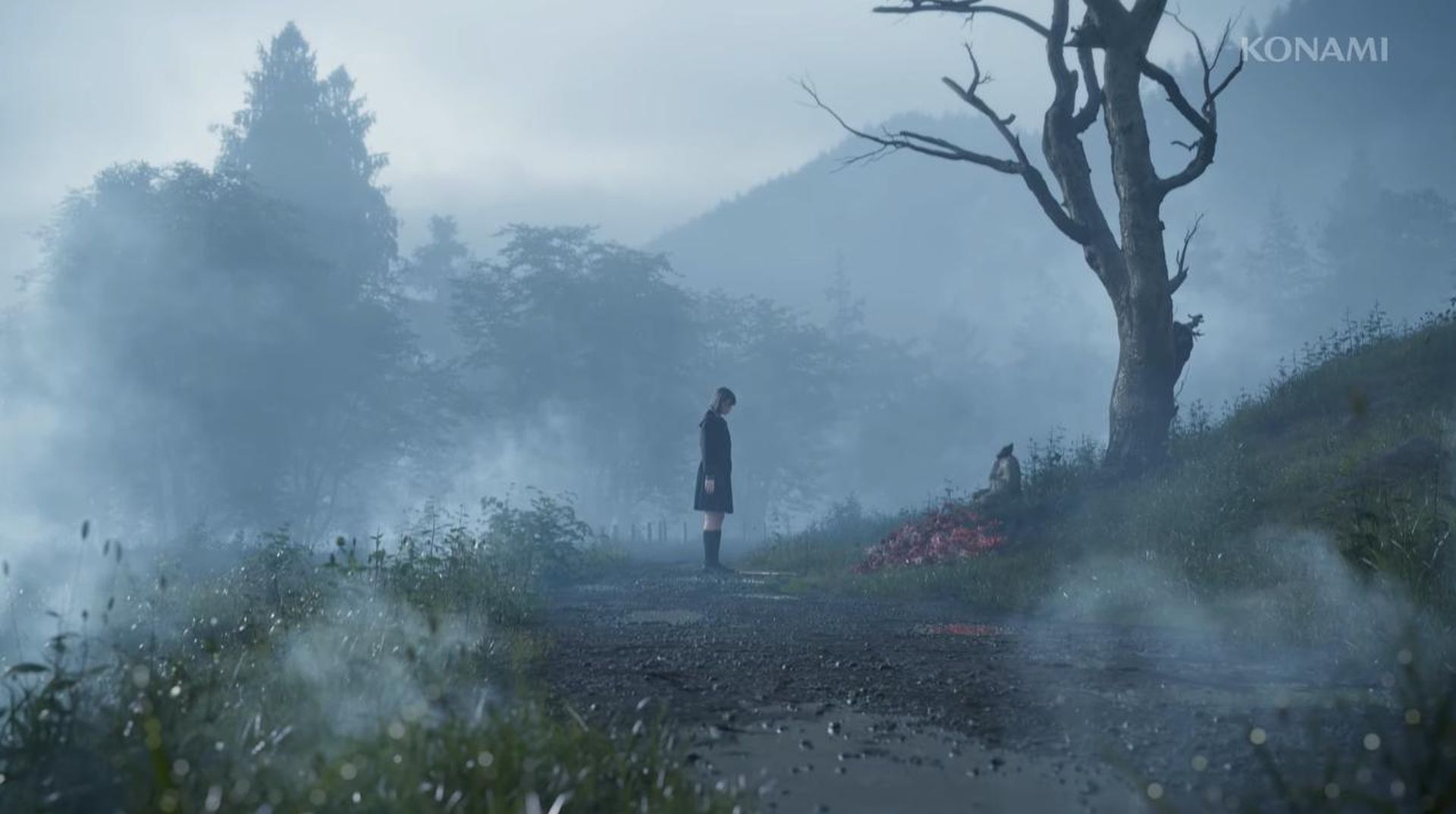
- The art style and graphics look fantastic. I wouldn't call them "AAA" levels of production, but they do look very good. The design of the monsters stand out, which is great for a series that is known for iconic monster designs, and I really like almost all of the monsters here. The "rot" that overtakes Ebisugaoka is both beautiful and disgusting, with a mix of flowers, and blood, which i think pairs well with the themes of this game. The art and maps used in Hinako's journal was also a nice touch, they look good and allow Hinako to express more through her writing and her drawings.

- Mechanically speaking, this game does fit the general design of a Silent Hill game. There is an overworld, with tons of fog, and an otherworld with tons of monsters, and you travel through both to progress. The overworld is semi-open-world, you use a map to navigate the whole area, and find ways to get around obstacles that impede your progress. You can choose to explore the town, which will often reveal rewards and special items that you'll need for other endings (especially on new game+), or just look for survival equipment along the way. The otherworld is focused less on open exploration and is more of a maze that you need to find your way through. You'll be doing most of the puzzle solving and boss fighting here. It is a survival horror game, which means that you must choose when to fight or to run (a very important choice that you will learn to consider as you play). You fight bosses, you solve puzzles, and the horrors that you witness are in some way tied into the characters and their trauma. Combat-wise, you have heavy and light attacks (meaning you need to think about which one is best for the situation), and a variety of weapons that differ in damage, range, and speed. Game design wise, this does feel like a Silent Hill game.
- But in every other sense, this game really doesn't feel like Silent Hill. Not only is there little connection to the mainline games, but the atmosphere, story, music, art direction, and violence just don't feel like Silent Hill.
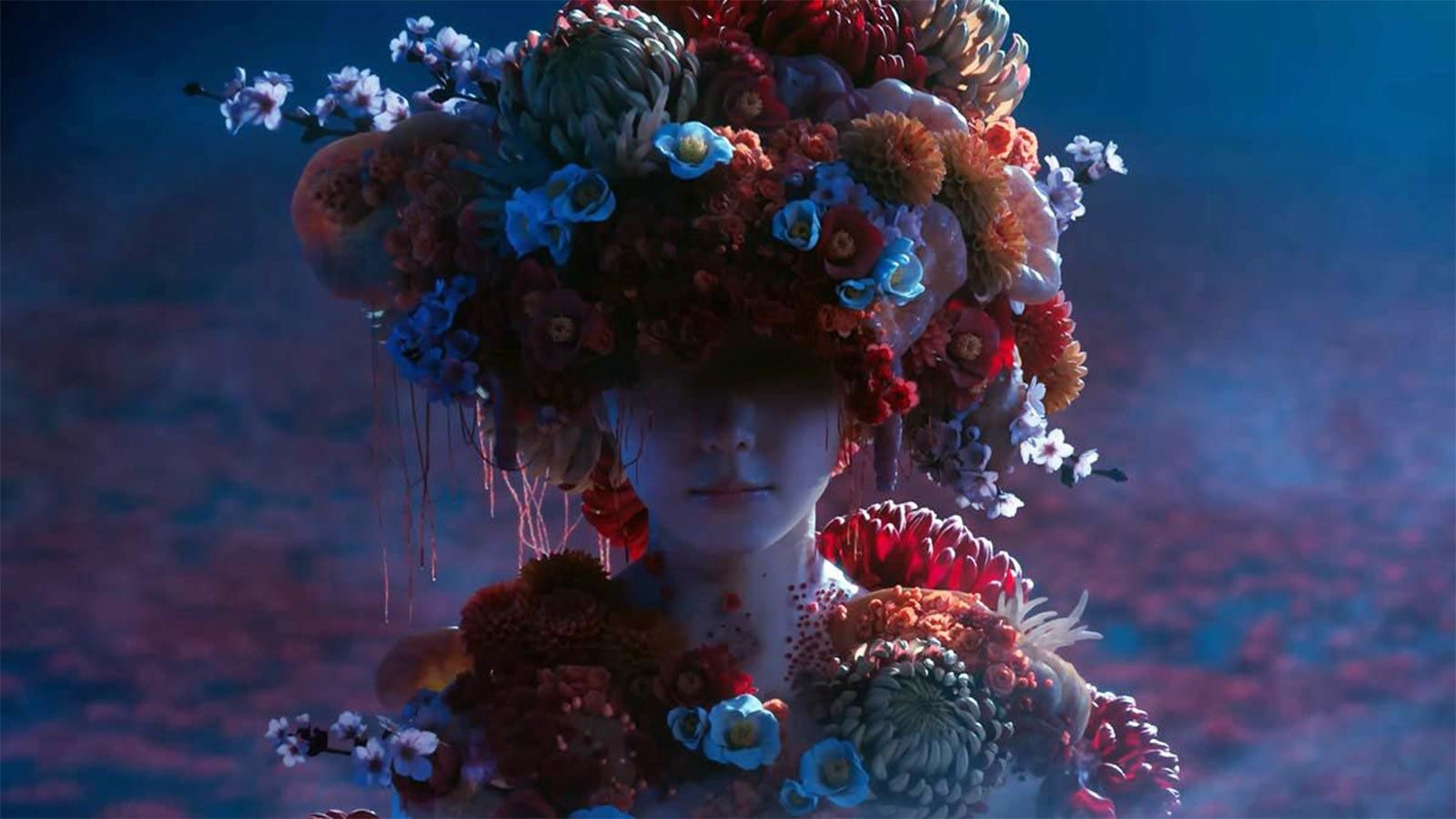
- In terms of aesthetic, Silent Hill has been known for its very industrial, and decaying direction since the very beginning. The towns that the series takes place in have been somewhat modern, and the horror can sometimes come from the feeling of abandonment that these places have as you explore them (the internet would probably categorize Silent Hill under "liminal horror", seeing as how many of the scariest areas are these abandoned rooms and buildings that don't match our pre-conceived notions of how they look and how they function). While Silent Hill f also takes place in an abandoned town, the use of flowers and organs to represent the rot doesn't really match the "liminal horror" of the previous games, it feels too organic and the industrial horror is also nowhere to be found. The Japanese setting also changes a lot about the overall atmosphere the game has. It leans heavily into Japanese music, mythology, and architecture in both the overworld and otherworld, which does have an impact on the general "vibe" of the game. The otherworld doesn't give me the hellish feeling that I had from previous games, I get a different feeling overall. One that feels more subtly disturbing and off-putting, contrasting with the wooden and natural 20th century Japanese architecture present within. Overall, the atmosphere felt more like "Siren" than Silent Hill.
- Music is good, but is not really that memorable to me. Some tracks stand out, especially the ending themes, but I wouldn't listen to most of these songs outside of the game. Once again, they just don't carry the same industrial, heavy sound I usually associate with the series.
- The story is the main part that just doesn't feel very Silent Hill. Yes it has characters facing their fears and insecurities, but so does a lot of psychological horror, especially these days. The town itself just does not feel like an oppressive force like it was in the main series, instead the focus is more on the force behind it's decay. A force, which may not be as supernatural as it seems (at least based on my first playthrough). The function of the otherworld is very different from the other games, it doesn't really feel like hell and more like a spiritual purgatory, as if this is where you go to transition between life and death. It doesn't decay like the otherworld in the other games, it stays mostly the same the whole time with the same type of 20th Japanese architecture found in the overworld. The way you interact with it is also very different; you don't explore the otherworld on your own, you actually have a guide that talks to you and shows you where to go. Fox Mask is unlike any other antagonist(???) that exists in these games. He comes off as human, and is less of an obvious monster or demon as the other cultic antagonists in the series. Speaking of which, there really isn't any mention of the cult or their deities in this game, which only makes this game feel more distant from the others. Finally, the metaphors and symbology the game uses to represent the dangers Hinako faces are hinted at being less spiritual/demonic than the ones in previous games. It makes it feel like the danger isn't as "real" as the ones in those games, which is a very different choice of direction since the town has always acted as both a metaphorical danger and a real one for the main character. It's also a place where characters deal with their past actions, not commit their present ones (as hinted at by the story). In this game, Hinako doesn't really seem to being dealing with her insecurities in the otherworld, and honestly there's a lot of evidence that many of her fears may be projection on her end. In other games, we learn about how the characters are involved with both the story and the town. We learn about how they affected each other, how they are connected to the town, and their overall role in the story. While most characters have their relationship with Hinako's trauma explained well (most notably her parents), there are other characters that I can't really figure out. I'm not sure how they play into things, or why Hinako hates them so much she has to confront them. The otherworld just serves a different purpose in this game, not as a place to confront the past and face your (or someone else's) demons, but more like a projection of one's insecurities, true or not. It feels manipulative, while the classic otherworld feels harsh but truthful.

- Speaking of the story, I have a lot of questions.
- Starting with Fox Mask: he seems very supportive, even after everything he makes you go through, but I'm still not sure what it is he really wanted seeing as how he's completely absent from the last part of the game (which seems very odd considering he is responsible for what ultimately happens).
- I'm also not too sure about the role that certain characters have when it comes to Hinako's trauma, specifically Sakuko and Shu. I'm not sure why Sakuko is so mad at Hinako (or perhaps why Hinako is so mad at her), and I'm especially confused on what to think of Shu. He's the only person that hasn't done anything wrong, but is (seemingly) punished anyway. At the very least, some part of Hinako feels that he has to be let go, but I'm not sure why. And then there's Junko. I'm still not sure what to make of her, though I do have some theories. The people who I felt were the most well explained were Rinko and Hinako's parents. I understand where Hinako's pain comes from, and why they ended up in her nightmares.
- There's a lot of talk about medicine and natural remedies in this game, and I'm sure they play into what ends up happening at the end, I just need to find out more.
- Are Hinako's fears justified? Does everyone really hate her? Is a lot of her insecurity just projection? Is it a combination of both?
- The first ending you get is just disappointing. There is no resolution to anything, and it feels like half of an ending at best. It hints at a lot, but it doesn't really say anything, or follow up on a lot of the stuff Hinako has had to go through. I just felt really confused and baffled that the game just ended there.
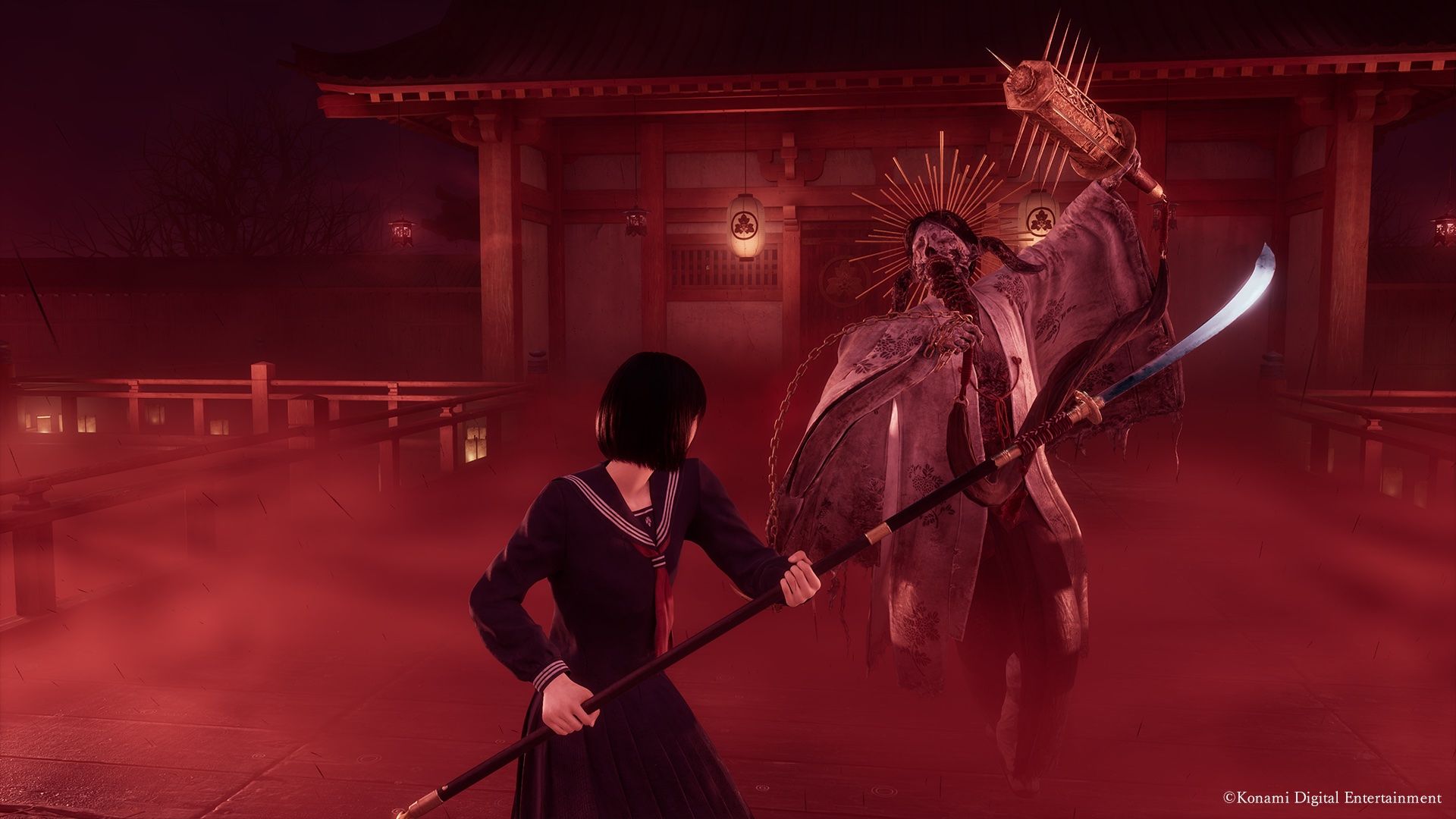
- Finally, there is the combat. I have a lot of thoughts about the combat, as I feel it is the main thing holding this game back.
- It isn't bad, but it does feel very clunky. Dodges don't always seem to respond on time, which can be very annoying to deal with. Some attacks can feel very awkward, and enemies can be a little hard to read. Certain arenas where you are forced to fight can also have a lot of odd design choices: like candles that you can't walk on, walls that you'll keep bumping into, and random pieces of level geometry that Hinako will get stuck on. Hinako will have her attack interrupted if she hits a wall, but enemies seem to be able to do whatever they want without interruption from the environment. It's all of these little things that add up to become a major annoyance.
- However, all of that would be somewhat forgivable if it wasn't for the camera. Simply put, this camera is terrible, especially in the otherworld. At best, it's passable, and at worst it will actually get you killed more than the enemies. You either can't see as much as you need to, or you can't see anything at all, especially if you're up against a wall. I can't believe it is 2026 and there are games that still haven't figured out how to make a camera work in tight corridors. Just have the wall become transparent so that I can see my character, don't zoom in so that I can't see anything. You may argue that could impact immersion, but dying to enemies that I can't see, or getting stuck on something offscreen completely ruins any immersion that I had up to that point. Even in a horror game, death should feel like my fault, and if the game is expecting me to play carefully and methodically, I need the game to work properly so that I can play it the way it wants me to. Otherwise, I'm going to get really angry and upset every time the game refuses to work properly.
- With all of that said, the combat does work properly in the overworld (mostly...), and in boss fights, and when it does I can see what the developers were going for. You have to make smart decisions about not just fighting, but movement and positioning. If you can lure an enemy to an area where you have an advantage, you should, and you should try to take the initiative and attack first. If you can run, run, and if you can't then dispatch of monsters as soon as possible. Focus works well, and the trade off of using sanity is a good way to prevent players from abusing it. Stamina can be an issue (especially in the beginning), but you get used to it and learn to avoid getting tired. It's important to remember that you can sprint in combat as well, and it can be just as effective as dodging, just without the stamina cost. Enemy animations seem confusing and intimidating at first, but if you learn to strike first, and strike fast you can learn how to deal with even the largest groups of enemies. Prioritize the most dangerous threats, strike first, create some distance when necessary, and pay attention to learn when to strike.
- Overall, when it works well the combat is good for a survival horror game, and can even be fun at times. Especially, once you get the three Fox Mask upgrades from the otherworld, those make combat feel exciting. However, there are many small problems that plague it, and when you experience a lot of those problems at once, they can really ruin everything.
- If the game is going to force me to fight my way out of certain situations, then I expect the combat to WORK in those situations. You can't use the excuse "Oh, but it's survival horror, the combat is MOSTLY optional!" when there are many instances where you have no choice but to fight. When that happens, the game needs to lock in and let me fight well. If I die, it should feel like my fault.
- Smaller notes:
- No allusions to other games from what I can tell, maybe they're locked behind other endings
- I do wonder if there is a Joke ending somewhere
- There is no "Results" screen at the end like in the other games, so save and die as much as you want I guess
- You get all the combat difficulty trophies for beating the combat on hard, but you only get the puzzle difficulty trophy for the difficulty you set the puzzles to. I only got the trophy for "Lost in the fog" so I guess I'll have to lower the difficulty for my next playthroughs if I want the trophies.

Overall I have enjoyed my time with Silent Hill f so far, but I think that there's a lot that I still need to see. I really hope that this next playthrough offers a lot of answers, or at least some more substantial hints.